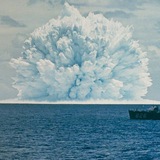
📝 Anon: "5 minutes per candle."
📎 Julian Potter
Please open Telegram to view this post
VIEW IN TELEGRAM
Forwarded from Tabz - Live News (Tabz)
U.S. forces have directed 31 vessels to turn around or return to port as part of the U.S. blockade against Iran.
Most vessels turned around have been oil tankers.
Please open Telegram to view this post
VIEW IN TELEGRAM
Forwarded from Middle East Spectator — MES
— 🇮🇱/🇱🇧/🇺🇳 NEW: The statue of Jesus Christ that was destroyed by an IDF soldier in southern Lebanon, was replaced by Italian UNIFIL troops
@Middle_East_Spectator
@Middle_East_Spectator
/CIG/ Telegram | Counter Intelligence Global
🇮🇳🌾 - A food crisis is emerging in India - Synthetic fertilizer is responsible for ~50% of food production - ~30% of fertilizer production used to go through the Strait - China accounts for ~10% and has restricted exports - Russia, accounting for ~16%, is…
🛢 🇮🇳 🌾 India to Purchase Fertilizer at Nearly Double Pre-War Price
India, the world’s top importer of urea, has agreed to buy the nitrogen-based fertilizer at sharply higher prices than in a previous tender as the Middle East conflict disrupts supplies and pushes global benchmarks higher.
Indian Potash Ltd., which imports the crop nutrient for the government, will secure 1.5 million tons for delivery on the west coast at $935 per ton, while another 1 million tons will be delivered on the east coast at $959 per ton, according to people familiar with the matter.
The offers are almost 90% higher than what India agreed to pay in a tender before the start of the conflict, said the people, who asked not to be named due to the commercial sensitivity of the information. Urea from the Middle East, a major supplier to the South Asian nation, was quoted at $490 a ton before the war began, according to Green Markets data.
More than two dozen firms submitted offers last week, quoting rates between $935 and $1,136 a ton. This would be India’s first purchase since the US-Israel strikes on Iran and comes at a crucial period ahead of sowing for monsoon crops such as rice, corn and soybeans. The 2.5 million-ton tender has not formally been awarded, but is expected to be confirmed by Thursday, the people said.
The South Asian nation’s urea production relies heavily on natural gas, much of it from the Middle East and used to make ammonia, a key feedstock for the fertilizer. Supply disruptions following the effective closure of the Strait of Hormuz forced some regional producers to idle plants last month. Indian authorities are now in talks with major producers and exporters to secure direct shipments of nitrogen-based and phosphatic fertilizers.
Global urea prices have surged since the war began, with nearly 45% of global supply moving through the Persian Gulf, according to Bloomberg Intelligence. Any prolonged disruptions could push prices even higher.
https://www.bloomberg.com/news/articles/2026-04-22/india-to-purchase-fertilizer-at-nearly-double-pre-war-price
📎 Bloomberg
Bloomberg.com
India Contracts Fertilizer at Nearly Double Pre-War Price
India, the world’s top importer of urea, has booked the nitrogen-based fertilizer at sharply higher prices than in a previous tender as the Middle East conflict disrupts supplies and pushes global benchmarks higher.
@CIG_telegram
Please open Telegram to view this post
VIEW IN TELEGRAM
US special envoy Paolo Zampolli suggested the swap to Fifa president Gianni Infantino and Trump, as leader of the country co-hosting the tournament. He argued that Italy’s four World Cup titles justify awarding it the slot, according to people familiar with the matter.
The plan was an effort to repair ties between Trump and Italy’s Prime Minister Giorgia Meloni after the two fell out amid the US president’s attacks against Pope Leo XIV over the Iran war, the people said.
But Iran issued a statement on Wednesday saying it is prepared for the tournament and plans to participate.
Trump has said that Iran’s footballers are “welcome” to come to the US, but also that it would be inappropriate and potentially dangerous for them.
Please open Telegram to view this post
VIEW IN TELEGRAM
The EU is considering dropping its opposition to new oil and gas drilling in the Arctic as it seeks to shore up energy supplies in response to the crisis in the Middle East.
The EU has been pushing for an international ban on new oil and gas drilling on environmental grounds since 2021 but it is now weighing abandoning the proposal, according to multiple people familiar with discussions and a document seen by the FT.
The U-turn could come as part of a review of the EU’s Arctic policy due by the autumn, several of the people said, although they cautioned that discussions remained at an early stage.
The EU’s 2021 goal to “push for oil, coal and gas to remain in the ground” in the Arctic came before Russia’s 2022 full-scale invasion of Ukraine and more recently the Iran war exposed the bloc’s reliance on imported fossil fuels.
The document seen by the FT acknowledged there had been “no progress” on securing backing from international partners for a moratorium on new drilling, and that the European Commission wants to assess “what alternatives might be considered” to the 2021 proposal.
One senior EU official said “it seems” Brussels will soften its stance on Arctic oil and gas drilling. “Taking into consideration the recent political developments and . . . relations with the United States, we need to diversify our market and co-operate with like-minded countries,” the official said.
A spokesperson for the Commission declined to comment.
A policy reversal would most benefit Norway, a non-EU member, which is the second most active country in developing an oil and gas industry in the Arctic after Russia.
Norway, western Europe’s largest petroleum producer, has become an increasingly important supplier of gas to the EU since 2022, and has positioned itself as the democratic supplier of choice to the bloc. It has tried to link that status to lifting the EU’s opposition to Arctic drilling.
“This is great for Norway. When this obstacle is removed it means that we can get closer to the EU on other stuff such as space and other defence issues,” said one Norwegian official.
Please open Telegram to view this post
VIEW IN TELEGRAM
archive.ph
EU rethinks opposition to Arctic oil and gas drilling
archived 22 Apr 2026 20:56:32 UTC
Global visible oil inventories have fallen -255 million barrels since the start of the conflict on February 27, to 7,864 million barrels.
Total estimated oil draws, including non-OECD refined products storage, have accelerated to 10.9 million barrels per day in April, the largest monthly draws on record since 2017.
Cumulative estimated draws since the start of the war now stand at 474 million barrels, with Hormuz flows holding at ~10% of normal, or 2.0 million barrels per day.
Meanwhile, even in an optimistic scenario where Strait of Hormuz flows begin recovering by late April, it is unlikely to prevent global visible inventories from reaching all-time lows, according to Goldman Sachs.
As inventories keep falling, physical oil markets are likely to require sharply higher prices for immediate delivery, since buyers cannot wait months for cheaper futures delivery when stocks are running critically low.
Goldman also warns that inventories cannot keep falling forever, and once they approach the minimum level needed to keep global supply chains running, the only way the market can rebalance is by destroying demand.
The global oil buffer is disappearing fast, which means oil prices are set to rise further.
Please open Telegram to view this post
VIEW IN TELEGRAM
/CIG/ Telegram | Counter Intelligence Global
The Trump administration is exploring ways to reset ties with a reclusive and autocratic state controlling prime geopolitical real estate along the Red Sea as Iran threatens to choke off a second vital maritime corridor against the backdrop of war with the U.S.
A senior Trump official, Massad Boulos, has told foreign counterparts that the U.S. aims to begin lifting some sanctions on Eritrea, a small African country with more than 700 miles of Red Sea coastline, according to current and former officials familiar with the matter. It is part of an effort by the Trump administration to restore higher-level diplomatic relations with the country for the first time in decades. Other officials said the plan to normalize ties with Eritrea and lift sanctions on the country is undergoing review and hasn’t yet been finalized.
The U.S. diplomatic push comes as an Iran-backed rebel group in Yemen, the Houthis, has threatened to shut down maritime traffic in the Red Sea amid Tehran’s efforts to cut trade through the Strait of Hormuz since the start of its war with the U.S. and Israel.
Boulos, President Trump’s envoy for Africa, met privately with Eritrea’s president, Isaias Afwerki, late last year in Cairo, officials and other people involved in the talks said. The goal of the meeting was to discuss an easing of U.S. sanctions and kick-start higher-level dialogues about resetting U.S.-Eritrea ties.
On Monday, Boulos met with Egyptian President Abdel Fattah Al Sisi in Cairo. Egypt is helping facilitate the dialogue between the U.S. and the Eritrean leader, officials said. During that meeting, Boulos told Sisi the U.S. plans to begin lifting sanctions on Eritrea soon, officials familiar with the matter said.
Boulos previously met with Eritrea’s foreign minister, Osman Saleh Mohammed, in September on the sidelines of the U.N. General Assembly in New York, officials said.
A State Department spokesperson said the Trump administration looks forward to strengthening U.S. ties with the people and government of Eritrea. The spokesperson didn’t address specific questions related to an easing of U.S. sanctions on Eritrea and the department didn’t make Boulos available for an interview.
The Eritrean leader has ruled his country since it first gained independence from Ethiopia in 1993, and has since consolidated power to create one of the world’s most repressive dictatorships. U.S. congressional commissions have referred to Eritrea as the “North Korea of Africa” for its systemic repression of political dissidents and religious freedom, as well as the torture of prisoners and forced conscription of a bulk of the country’s youth into military service.
Please open Telegram to view this post
VIEW IN TELEGRAM
Forwarded from Middle East Spectator — MES
—❗️🇺🇸/🇮🇷 BREAKING: The Iranian Parliament has prepared a draft law on new regulations for passage through the Strait of Hormuz
It includes the following:
– The payment of tolls in Rials prior to granting passage rights.
– Inclusion of the name ‘Persian Gulf’ in all contracts.
– Payment of compensation (in addition to tolls) by ships affiliated with nations that took part in the war against Iran.
Passage through the Strait is permanently PROHIBITED for:
1. Ships associated with Israel.
2. Countries that sanction Iran or act as accomplices in blocking Iranian assets.
3. Military vessels of hostile nations, including the United States.
@Middle_East_Spectator
Forwarded from Geopolitics Watch (Sana'a 🌿)
I have ordered the United States Navy to shoot and kill any boat, small boats though they may be (Their naval ships are ALL, 159 of them, at the bottom of the sea!), that is putting mines in the waters of the Strait of Hormuz. There is to be no hesitation. Additionally, our mine “sweepers” are clearing the Strait right now. I am hereby ordering that activity to continue, but at a tripled up level! Thank you for your attention to this matter. President DONALD J. TRUMP
Please open Telegram to view this post
VIEW IN TELEGRAM
🇺🇸 🇮🇳 🇨🇳 Trump in a detailed note, shared on Truth Social on the issue of citizenship compares India, China and others as hellhole.
“A baby here becomes an instant citizen and then they bring in their entire family from China, or India or some other hellhole on the planet.”
📎 Insider Paper
“A baby here becomes an instant citizen and then they bring in their entire family from China, or India or some other hellhole on the planet.”
📎 Insider Paper
This media is not supported in your browser
VIEW IN TELEGRAM
🛢 🇺🇸 🇮🇷 Overnight, U.S. forces carried out a maritime interdiction and right-of-visit boarding of the sanctioned stateless vessel M/T Majestic X transporting oil from Iran, in the Indian Ocean within the INDOPACOM area of responsibility.
📎 Department of War
We will continue global maritime enforcement to disrupt illicit networks and interdict vessels providing material support to Iran, wherever they operate.
International waters cannot be used as a shield by sanctioned actors. The Department of War will continue to deny illicit actors and their vessels freedom of maneuver in the maritime domain.
📎 Department of War
Forwarded from Rerum Novarum // Intel, Breaking News, and Alerts 🇺🇸
🇺🇸🇮🇷⚡️- A post shared by President Donald Trump on truth social that says;
"If there are two factions in Iran, one that wants a deal and one that doesn't, let's kill the ones who dont want a deal".
"If there are two factions in Iran, one that wants a deal and one that doesn't, let's kill the ones who dont want a deal".
/CIG/ Telegram | Counter Intelligence Global
With a joint US-Israeli push to recognise the independence of Somaliland in exchange for military access inside Somaliland's territory and a decade-long established military presence in Djibouti, the U.S. would effectively encircle the Houthis.
@CIG_telegram
Please open Telegram to view this post
VIEW IN TELEGRAM
🚙🥫 The global aluminium market is experiencing on of its largest supply SHOCKS in the modern era:
London Metal Exchange aluminium prices rose to a 4-year high of $3,672 per ton on April 16, while US physical premiums surged to a record $2,521.50 per ton.
European physical premiums jumped +90% in the 6 weeks since the start of the Iran War.
Physical premiums are the extra cost buyers pay on top of the exchange price to secure immediate delivery of real aluminium, and when they surge it signals acute physical scarcity.
The Middle East makes up ~9% of global aluminium production capacity, or ~7 million metric tons annually, with Gulf Cooperation Council countries alone making up more than 6 million tons.
Qatar's Qatalum has already cut production by -40%, while Aluminium Bahrain shut down ~20% of its capacity, and a major UAE smelter was forced to halt operations entirely after drone strikes, with a restart potentially taking up to a year.
The market may face a deficit of at least 2 million tons by year-end, against total global visible inventories of just 1.5 million tons, according to Mercuria.
JPMorgan warns this will be the largest aluminium supply deficit in more than 25 years, with the US and Europe most exposed given low domestic stockpiles and heavy reliance on Middle Eastern imports.
Aluminium is in everything from cars to cans, and its price shock is about to hit every industry.
🔗 Global Markets Investor
London Metal Exchange aluminium prices rose to a 4-year high of $3,672 per ton on April 16, while US physical premiums surged to a record $2,521.50 per ton.
European physical premiums jumped +90% in the 6 weeks since the start of the Iran War.
Physical premiums are the extra cost buyers pay on top of the exchange price to secure immediate delivery of real aluminium, and when they surge it signals acute physical scarcity.
The Middle East makes up ~9% of global aluminium production capacity, or ~7 million metric tons annually, with Gulf Cooperation Council countries alone making up more than 6 million tons.
Qatar's Qatalum has already cut production by -40%, while Aluminium Bahrain shut down ~20% of its capacity, and a major UAE smelter was forced to halt operations entirely after drone strikes, with a restart potentially taking up to a year.
The market may face a deficit of at least 2 million tons by year-end, against total global visible inventories of just 1.5 million tons, according to Mercuria.
JPMorgan warns this will be the largest aluminium supply deficit in more than 25 years, with the US and Europe most exposed given low domestic stockpiles and heavy reliance on Middle Eastern imports.
Aluminium is in everything from cars to cans, and its price shock is about to hit every industry.
Please open Telegram to view this post
VIEW IN TELEGRAM
/CIG/ Telegram | Counter Intelligence Global
📢 🇺🇸 🇮🇷 Washington Post columnist Marc Thiessen says all the US needs to do to get a deal with Iran is "kill the [Iranian leaders] that don't want a deal." Thiessen urged Trump to kill Iranian diplomats to secure a deal in a deranged Post column earlier this…
This media is not supported in your browser
VIEW IN TELEGRAM
📝 🇺🇸 🇮🇷 Trump posted Chris Menahan's clip of Marc Thiessen calling to kill Iranian negotiators. (See top right: He cropped out INFOLIBNEWS)
📎 Donald J. Trump
📎 Donald J. Trump