
What color is hippo milk?
Hippopotamus Milk is Pink in Color. Hippopotamuses produce two unique skin secretions (so unique they're named after the animal), "hipposudoric acid" and its analog "norhipposudoric acid". It gives the hippopotamuses' sweat a red coloration, commonly believed to be blood (it's not).
@askmenow
Hippopotamus Milk is Pink in Color. Hippopotamuses produce two unique skin secretions (so unique they're named after the animal), "hipposudoric acid" and its analog "norhipposudoric acid". It gives the hippopotamuses' sweat a red coloration, commonly believed to be blood (it's not).
@askmenow
What is the new imperialism?
The New Imperialism (sometimes Neoimperialism or Neo-imperialism) was a period of colonial expansion—and its accompanying ideologies—by the European powers, the United States of America and the Empire of Japan during the late 19th and early 20th centuries.
@askmenow
The New Imperialism (sometimes Neoimperialism or Neo-imperialism) was a period of colonial expansion—and its accompanying ideologies—by the European powers, the United States of America and the Empire of Japan during the late 19th and early 20th centuries.
@askmenow
What percentage of the English language is Latin?
Over 60 percent of all English words have Greek or Latin roots. In the vocabulary of the sciences and technology, the figure rises to over 90 percent. About 10 percent of the Latin vocabulary has found its way directly into English without an intermediary (usually French).
@askmenow
Over 60 percent of all English words have Greek or Latin roots. In the vocabulary of the sciences and technology, the figure rises to over 90 percent. About 10 percent of the Latin vocabulary has found its way directly into English without an intermediary (usually French).
@askmenow
What countries are located in the taiga?
The taiga is the largest continuous biome in the world. This biome is located in the northern part of the Northern Hemisphere and is in North America, Asia, and Europe. It stretches across Alaska, Canada, Scandinavia, and Russia; spreading through the Northern Hemisphere.
@askmenow
The taiga is the largest continuous biome in the world. This biome is located in the northern part of the Northern Hemisphere and is in North America, Asia, and Europe. It stretches across Alaska, Canada, Scandinavia, and Russia; spreading through the Northern Hemisphere.
@askmenow
Which is the only continent without glaciers?
Glaciers are present on every continent and approximately fifty countries, excluding those (Australia, South Africa) that have glaciers only on distant subantarctic island territories. Extensive glaciers are found in Antarctica, Chile, Canada, Alaska, Greenland and Iceland.
@askmenow
Glaciers are present on every continent and approximately fifty countries, excluding those (Australia, South Africa) that have glaciers only on distant subantarctic island territories. Extensive glaciers are found in Antarctica, Chile, Canada, Alaska, Greenland and Iceland.
@askmenow
Which planet has the fastest rotation?
Jupiter is the fastest spinning planet in our Solar System rotating on average once in just under 10 hours. That is very fast especially considering how large Jupiter is. This means that Jupiter has the shortest days of all the planets in the Solar System.
@askmenow
Jupiter is the fastest spinning planet in our Solar System rotating on average once in just under 10 hours. That is very fast especially considering how large Jupiter is. This means that Jupiter has the shortest days of all the planets in the Solar System.
@askmenow
👍1
What speed is required to leave Earth?
A spacecraft leaving the surface of Earth, for example, needs to be going about 11 kilometers (7 miles) per second, or over 40,000 kilometers per hour (25,000 miles per hour), to enter orbit. Achieving escape velocity is one of the biggest challenges facing space travel.
@askmenow
A spacecraft leaving the surface of Earth, for example, needs to be going about 11 kilometers (7 miles) per second, or over 40,000 kilometers per hour (25,000 miles per hour), to enter orbit. Achieving escape velocity is one of the biggest challenges facing space travel.
@askmenow
What causes the aurora borealis?
When charged particles from the sun strike atoms in Earth's atmosphere, they cause electrons in the atoms to move to a higher-energy state. When the electrons drop back to a lower energy state, they release a photon: light. This process creates the beautiful aurora, or northern lights.
@askmenow
When charged particles from the sun strike atoms in Earth's atmosphere, they cause electrons in the atoms to move to a higher-energy state. When the electrons drop back to a lower energy state, they release a photon: light. This process creates the beautiful aurora, or northern lights.
@askmenow
How do snakes hear if they dont have ears?
When people and most animals hear, sound waves strike the eardrum and go to the inner ear, which is sensitive to the sound waves or vibrations. Snakes do not have eardrums, but their skins, muscles, and bones carry the sound waves to the inner ears.
@askmenow
When people and most animals hear, sound waves strike the eardrum and go to the inner ear, which is sensitive to the sound waves or vibrations. Snakes do not have eardrums, but their skins, muscles, and bones carry the sound waves to the inner ears.
@askmenow
Is a volcano a type of mountain?
A volcano is a landform (usually a mountain) where molten rock erupts through the surface of the planet. In simple terms a volcano is a mountain that opens downward to a pool of molten rock (magma) below the surface of the earth. It is a hole in the Earth from which molten rock and gas erupt.
@askmenow
Is smoke a state of matter?
Smoke is particulate material suspended in a gas (air). The particulates may be very finely divided solids or aerosol particles composed of liquid materials. Smoke is neither solid or gas, it is a colloidal dispersion that is a different arrangement of matter.
@askmenow
Smoke is particulate material suspended in a gas (air). The particulates may be very finely divided solids or aerosol particles composed of liquid materials. Smoke is neither solid or gas, it is a colloidal dispersion that is a different arrangement of matter.
@askmenow
👍1
What kind of animals live in the desert?
There are coyotes, foxes, peccaries, tarantulas, scorpions, ring tailed cats, antelope, skunks, mule deer, boars, and in some places, lions and elephants. There is an abundance of small animals that support the deserts population of hawks, falcons, owls, roadrunners, buzzards, and eagles.
@askmenow
There are coyotes, foxes, peccaries, tarantulas, scorpions, ring tailed cats, antelope, skunks, mule deer, boars, and in some places, lions and elephants. There is an abundance of small animals that support the deserts population of hawks, falcons, owls, roadrunners, buzzards, and eagles.
@askmenow
How strong is a strand of human hair?
A single strand could hold 100g (3oz) in weight: the combined hair of a whole head could support 12 tonnes, or the weight of two elephants. Weight for weight, it is not as strong as steel: more like aluminium, or reinforced glass fibres or Kevlar, which is used to make bulletproof vests.
@askmenow
A single strand could hold 100g (3oz) in weight: the combined hair of a whole head could support 12 tonnes, or the weight of two elephants. Weight for weight, it is not as strong as steel: more like aluminium, or reinforced glass fibres or Kevlar, which is used to make bulletproof vests.
@askmenow
What determines a person's blood type?
A person's ABO type is determined by the presence or absence of the A or B substance on his red cells. A person can have one or the other (types A or B respectively), both (type AB), or neither (type O). A blood protein which was discovered in 1940.
@askmenow
A person's ABO type is determined by the presence or absence of the A or B substance on his red cells. A person can have one or the other (types A or B respectively), both (type AB), or neither (type O). A blood protein which was discovered in 1940.
@askmenow
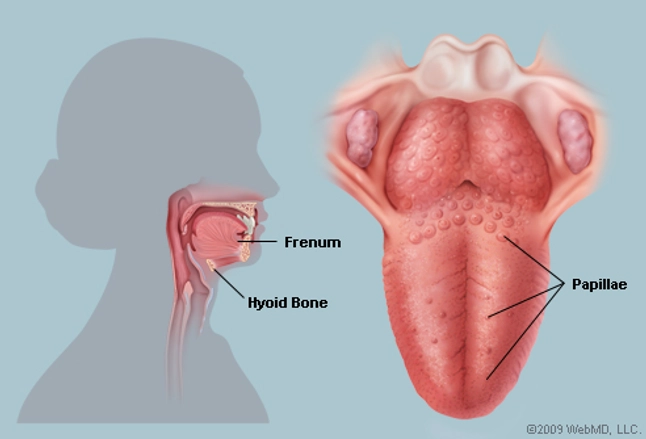
Is the tongue a muscle or an organ?
The tongue is a muscular organ in the mouth. The tongue is covered with moist, pink tissue called mucosa. Tiny bumps called papillae give the tongue its rough texture. Thousands of taste buds cover the surfaces of the papillae..read more about it....
@askmenow
The tongue is a muscular organ in the mouth. The tongue is covered with moist, pink tissue called mucosa. Tiny bumps called papillae give the tongue its rough texture. Thousands of taste buds cover the surfaces of the papillae..read more about it....
@askmenow
Why does fruit ripen faster in a paper bag?
Placing fruit in a paper bag helps to concentrate the levels of ethylene gas which is what helps induce the ripening of the above mentioned fruits (bananas/avocados, etc.). In fact, avocados and pears must be picked in order to ripen.
@askmenow
Placing fruit in a paper bag helps to concentrate the levels of ethylene gas which is what helps induce the ripening of the above mentioned fruits (bananas/avocados, etc.). In fact, avocados and pears must be picked in order to ripen.
@askmenow
Which country first adopted time zones?
On November 2, 1868, the then-British colony of New Zealand officially adopted a standard time to be observed throughout the colony, and was perhaps the first country to do so. It was based on the longitude 172°30′ East of Greenwich, that is 11 hours 30 minutes ahead of GMT.
@askmenow
On November 2, 1868, the then-British colony of New Zealand officially adopted a standard time to be observed throughout the colony, and was perhaps the first country to do so. It was based on the longitude 172°30′ East of Greenwich, that is 11 hours 30 minutes ahead of GMT.
@askmenow
What makes a primary color?
Start with red, yellow, and blue paint—the primary colors. Use these to make secondary colors. Then make tertiary colors by mixing primary colors with the nearest secondary colors. (For example, you might mix yellow with green to make yellow-green, or yellow with orange to make yellow-orange.)
@askmenow