
What kind of animals live in the desert?
There are coyotes, foxes, peccaries, tarantulas, scorpions, ring tailed cats, antelope, skunks, mule deer, boars, and in some places, lions and elephants. There is an abundance of small animals that support the deserts population of hawks, falcons, owls, roadrunners, buzzards, and eagles.
@askmenow
There are coyotes, foxes, peccaries, tarantulas, scorpions, ring tailed cats, antelope, skunks, mule deer, boars, and in some places, lions and elephants. There is an abundance of small animals that support the deserts population of hawks, falcons, owls, roadrunners, buzzards, and eagles.
@askmenow
How strong is a strand of human hair?
A single strand could hold 100g (3oz) in weight: the combined hair of a whole head could support 12 tonnes, or the weight of two elephants. Weight for weight, it is not as strong as steel: more like aluminium, or reinforced glass fibres or Kevlar, which is used to make bulletproof vests.
@askmenow
A single strand could hold 100g (3oz) in weight: the combined hair of a whole head could support 12 tonnes, or the weight of two elephants. Weight for weight, it is not as strong as steel: more like aluminium, or reinforced glass fibres or Kevlar, which is used to make bulletproof vests.
@askmenow
What determines a person's blood type?
A person's ABO type is determined by the presence or absence of the A or B substance on his red cells. A person can have one or the other (types A or B respectively), both (type AB), or neither (type O). A blood protein which was discovered in 1940.
@askmenow
A person's ABO type is determined by the presence or absence of the A or B substance on his red cells. A person can have one or the other (types A or B respectively), both (type AB), or neither (type O). A blood protein which was discovered in 1940.
@askmenow
Is the tongue a muscle or an organ?
The tongue is a muscular organ in the mouth. The tongue is covered with moist, pink tissue called mucosa. Tiny bumps called papillae give the tongue its rough texture. Thousands of taste buds cover the surfaces of the papillae..read more about it....
@askmenow
The tongue is a muscular organ in the mouth. The tongue is covered with moist, pink tissue called mucosa. Tiny bumps called papillae give the tongue its rough texture. Thousands of taste buds cover the surfaces of the papillae..read more about it....
@askmenow
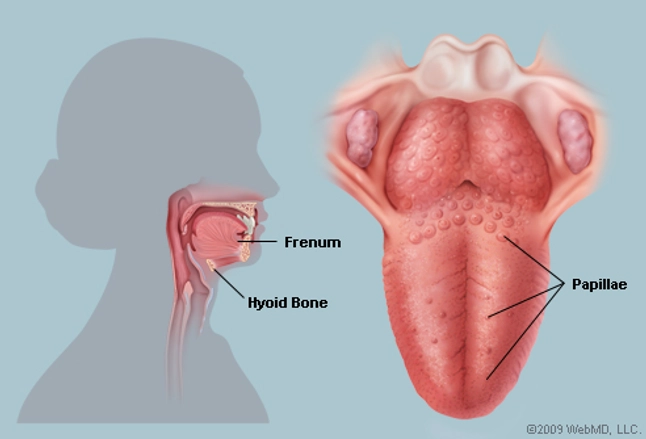
Why does fruit ripen faster in a paper bag?
Placing fruit in a paper bag helps to concentrate the levels of ethylene gas which is what helps induce the ripening of the above mentioned fruits (bananas/avocados, etc.). In fact, avocados and pears must be picked in order to ripen.
@askmenow
Placing fruit in a paper bag helps to concentrate the levels of ethylene gas which is what helps induce the ripening of the above mentioned fruits (bananas/avocados, etc.). In fact, avocados and pears must be picked in order to ripen.
@askmenow
Which country first adopted time zones?
On November 2, 1868, the then-British colony of New Zealand officially adopted a standard time to be observed throughout the colony, and was perhaps the first country to do so. It was based on the longitude 172°30′ East of Greenwich, that is 11 hours 30 minutes ahead of GMT.
@askmenow
On November 2, 1868, the then-British colony of New Zealand officially adopted a standard time to be observed throughout the colony, and was perhaps the first country to do so. It was based on the longitude 172°30′ East of Greenwich, that is 11 hours 30 minutes ahead of GMT.
@askmenow
What makes a primary color?
Start with red, yellow, and blue paint—the primary colors. Use these to make secondary colors. Then make tertiary colors by mixing primary colors with the nearest secondary colors. (For example, you might mix yellow with green to make yellow-green, or yellow with orange to make yellow-orange.)
@askmenow
What causes a star to become a supernova?
Very massive stars can undergo core collapse when nuclear fusion suddenly becomes unable to sustain the core against its own gravity; this is the cause of all types of supernova except type Ia. The collapse may cause violent expulsion of the outer layers of the star resulting in a supernova.
@askmenow
👍1
Is Mercury Found in Nature?
Like lead or cadmium, mercury is a constituent element of the earth, a heavy metal. In pure form, it is known alternatively as "elemental" or "metallic" mercury (also expressed as Hg(0) or Hg0). Mercury is rarely found in nature as the pure, liquid metal, but rather within compounds and inorganic salts.
@askmenow
Do male marsupials have a pouch?
In most marsupials, only the females have a pouch. However, males of the water opossum and the extinct tasmanian tiger (or thylacine) also have a pouch. The males of both the thylacine and water opposum used/use their pouch to keep their genitalia from getting entangled in vegetation.
@askmenow
In most marsupials, only the females have a pouch. However, males of the water opossum and the extinct tasmanian tiger (or thylacine) also have a pouch. The males of both the thylacine and water opposum used/use their pouch to keep their genitalia from getting entangled in vegetation.
@askmenow
What animal has five hearts?
While it is not technically a “heart,” the aortic arch of the earthworm performs a similar function and is commonly referred to as one for the sake of simplicity. An earthworm has five arches/hearts that are segmented and pump blood throughout its body.
@askmenow
While it is not technically a “heart,” the aortic arch of the earthworm performs a similar function and is commonly referred to as one for the sake of simplicity. An earthworm has five arches/hearts that are segmented and pump blood throughout its body.
@askmenow
Which planet does not have a satellite?
Planets around other stars are likely to have natural satellites as well, although none have been observed. Of the inner planets, Mercury and Venus have no moons; Earth has one large moon, known as the Moon; and Mars has two tiny moons, Phobos and Deimos.
@askmenow
Planets around other stars are likely to have natural satellites as well, although none have been observed. Of the inner planets, Mercury and Venus have no moons; Earth has one large moon, known as the Moon; and Mars has two tiny moons, Phobos and Deimos.
@askmenow
Where does longitude begin and end?
Consecutive degrees of longitude are 60 miles apart at the equator, and all come together at the North Pole and the South Pole. These are 360 degrees of longitude - 180 degrees lie east, and 180 degrees lie west of Greenwich, England, an arbitrary starting point used by all mapmakers.
@askmenow
Consecutive degrees of longitude are 60 miles apart at the equator, and all come together at the North Pole and the South Pole. These are 360 degrees of longitude - 180 degrees lie east, and 180 degrees lie west of Greenwich, England, an arbitrary starting point used by all mapmakers.
@askmenow
Do starfish have a brain?
The nervous system of the starfish is very simple...there is no brain and there are not even any ganglia to coordinate movement. The nervous system is characterized by a nerve ring that surrounds the mouth. A radial nerve branches off of the nerve ring and extends to each arm.
@askmenow
The nervous system of the starfish is very simple...there is no brain and there are not even any ganglia to coordinate movement. The nervous system is characterized by a nerve ring that surrounds the mouth. A radial nerve branches off of the nerve ring and extends to each arm.
@askmenow
Why do boys voices change at puberty?
It's the larynx (or voice box) that's causing all that noise. As the body goes through puberty, the larynx grows larger and thicker. It happens in both boys and girls, but the change is more evident in boys. Girls' voices only deepen by a couple of tones and the change is barely noticeable.
@askmenow
What was the first metal used by man?
Over 4,000 years ago, when it was discovered that minerals could be melted, curiosity led man to combine melted metals (alloys). By accident they made bronze by adding tin to copper (the Bronze Age). Another combination of zinc and copper made brass.
@askmenow
Over 4,000 years ago, when it was discovered that minerals could be melted, curiosity led man to combine melted metals (alloys). By accident they made bronze by adding tin to copper (the Bronze Age). Another combination of zinc and copper made brass.
@askmenow
Do evergreen trees lose their leaves?
Deciduous trees shed their leaves usually as an adaptation to a cold or dry season. Most tropical rainforest plants are evergreens, replacing their leaves gradually throughout the year as the leaves age and fall, whereas species growing in seasonally arid climates may be either evergreen or deciduous.
@askmenow