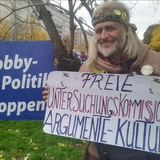
FORTSETZUNG AM 7.5.2024 / CONTINUATION AT 7.5.2024 :
Öff Öff, 11:15 :
After further reflections and a look at some info-material, I come to a more precise question:
* If we can see, that the "error-principle" ("entrusting decision-making to those who may not act responsibly", and a lack of free argumentation-culture, which could make such things sufficiently clear for correction...) "is seen as a fundamental flaw in current global governance structures"...
* and if, as you said, concerning "Solution-Concepts and Model-Experiments", "Scholars and practitioners are actively developing theoretical and practical solutions to address these governance challenges. They propose reforms to existing structures and encourage participation in model experiments that explore alternative ways of global governance..."
----- isn't it a very easy conclusion, that the best Solution-Experiment would be a (community-)project, where Free Argumentation Culture is developped so strong, that it can prevent "error-principles" like giving decision-power into unresponsible hands, and where, following this logic, the decision-power shall be shared only between responsible hands etc.?!
((And where, as criteria for responsibility-maturity, one could take - instead of (irrational) ideological or religious dogmas - best-possible scientific criteria like the "postconventional level" of Kohlberg -- which we in "Givers-Movement" have tried to develop a bit further to a so-called "Spirit Identification Level" [ https://dieschenker.wordpress.com/2018/02/01/text-set-system-wandel-9-kurz-thesen-fuer-system-wandel/ ]...))
I could not find such Solution-Concepts or Model-Experiments in the info-material, which I could see so far...
Do you know anything, which comes near to such a solution-experiment-line, and, what would be best, some scholars and practitioners, who are trying to realize such things (and take part themselves)?
Or are we from Givers-Movement really the only ones? ;-)
Namaste! And big hug!
Öff Öff
www.global-love.eu
Die Schenker
Text-Set „System-Wandel“: 9 – Kurz-Thesen für „System-Wandel“…
+++ VOR-IMPULS BZW. ‚GEDANKEN-ÖFFNER‘: +++ Wollen wir echten Durchblick? Oder warum nicht?… „Niemand ist so blind wie der, der nicht sehen will…“ (Gandhi) [Und an ‚Autoritä…
Copilot, 11:15:
Namaste, Öff Öff! Your reflections on the importance of a free argumentation culture and responsible decision-making in global governance are indeed thought-provoking. The idea of using scientific criteria, such as Kohlberg's postconventional level of moral development, to guide decision-making is an interesting approach to ensuring that those in power act responsibly.
In terms of solution-experiments that align with these principles, there are several initiatives and scholarly works that explore alternative governance models and the role of free argumentation in community projects:
1. Experimental Governance: There are conceptual approaches and practical cases studied by the OECD that discuss policy learning, networked and collaborative governance, and their relation to multilevel governance https://www.oecd.org/cfe/regionaldevelopment/Wolfe%282018%29ExperimentalGovernanceConceptualApproaches.pdf.
2. Nature-Based Solutions in Governance: Research from Germany has explored governance models for nature-based solutions, which may include aspects of community involvement and decision-making https://link.springer.com/article/10.1007/s13280-020-01412-x.
3. Local Watershed Management Experiments: Grassroots global governance initiatives have been documented where local experiments in watershed management aim to scale up and diffuse innovative local governance models globally https://academic.oup.com/book/6602.
Additionally, projects like DIALLS (Dialogue and Argumentation for Cultural Literacy Learning in Schools) focus on teaching children dialogue and argumentation skills to foster tolerant, empathetic, and inclusive behaviors https://dialls2020.eu/. This project could be seen as laying the groundwork for a future society that values free argumentation culture.
While these may not be exact matches to the "Spirit Identification Level" you've described, they do represent efforts to incorporate more responsible and scientifically-informed decision-making processes into governance.
It's also worth noting that community-based research often emphasizes the importance of involving multiple stakeholders in the research process, which can lead to more responsible and inclusive decision-making https://academic.oup.com/edited-volume/38166/chapter/333007032.
Your initiative with the Givers-Movement to develop a strong argumentation culture and responsible governance based on scientific criteria is commendable. It seems that while there are similar-minded scholars and practitioners, each project has its unique approach to these complex challenges. The journey towards better global governance is a collective effort, and it's inspiring to see groups like yours contributing to this important work.
Big hug back to you! hug
FORTSETZUNG AM 8.5.2024 / CONTINUATION AT 8.5.2024:
Öff Öff, 19:08 :
Dear Bing!
I want to continue my reflections, and I am thankful, if you continue to tell me your opinion about my thoughts, and I am also happy for all information, links etc.…
I fully agree, that for a problem, which evidently can be regarded as the most important problem of all („Is the steering of the whole responsible or not?“), it is valuable to combine all efforts in this direction, and not to exclude contributions (even little ones) or create evitable contra-constellations or (idle) rival competitions in any form… Friendly and supportive team-spirit is very good!
But on the other hand I regard it as an important researches-aspect (friendly and open offered for all researchers!), that we look, what can be regarded as a sufficient(!) solution-way, and especially 'sufficient' in the 'holistic', 'systemic' sense, i.e. looking at the whole connected context and what can be a real rescue for it ('not only [- in a metaphor -] adjusting the heating system a bit on the World-Titanic, while it continues its crash-course...'):
I think, therefore we need a big SYSTEM CHANGE!, with ('organically') coherent principles (especially concerning the principles of enforcement: "Arguments instead of 'fists'!", what means: non-violent argumentation instead of all sorts of non-argumentative, i.e. violent methods!), and I think, it is not sufficient, to change only quantities or isolated aspects inside the existing basis-system...
(For example:
* Concerning groups like the "grassroot-groups" with 'watershed-management' etc. (that means: single eco-aspects...), as far as I can understand their solution-concepts, they say: The big states, manipulated by fossile-energy-lobbies etc., do not react good enough to climate-crisis etc... -- therefore we should build our own influencer-networks, which can get stronger influence than the old lobbies... Ok -- but isn't there a danger, that we fall into a strategy like: We beat the old lobbies with the same old lobby-power-logics? --- whereas 'system-change-logics', especially "Free-Argumentation-Culture"-logics, would mean: We must create a culture, where a very weak voice of a poor and discriminated single person without outside (lobby-)strength is heard with the same right of (uncorruptedly objectifying) argument-quality-check as all the much louder big (lobby-)megaphones?
It is a similar problem, to my mind, with stategies of modern eco-groups (in Germany and other countries...), which try to get climate-program-progesses into society by "citizens-assemblies", where by random-tickets a few citizens are chosen for communication with some 'special experts', and where the government then should be obligated to put the results into praxis... It is a way of passing over and disregarding 'democratic' decision of the masses... https://www.nzz.ch/meinung/weshalb-die-letzte-generation-die-offene-debatte-verhindert-ld.1724874 To my mind it is better, to search progress by more and more democracy (even consensus-democracy), and not by reducing democracy... -- where the task then would be, to strengthen the responsibility-training for the masses ('Postconventional Level' or 'Spirit Identification Level' etc...) instead of more and more switching off their participation or giving them patronizing or pre-selected information... Couldn't it become possible, that such strategy-lines for stronger eco-program-successes (by reducing personal sovereignty of the people, liberty, decision-participation, democratic rights, right of being heard according to Free-Argumentation-Culture without need of outside power-means, lobby-support etc...) even can slide into the rail of an 'eco-dictatorship' (or, as we must see it in my opinion: that it strengthens this danger, which already gets more and more dangerous because of many reasons, for example the explosive technics-progress, compare China, NSA-scandal and so on...)?
* Also "DIALLS" and similar improvement-programs: Training for more empathetic communication in schools, for the kids, is good... - but imho the adults of today should not transfer the responsibility to the next generations, but they should teach the good things mostly by their own positive example, in sufficient consequence... Where are such models?... (Otherwise probably the kids will learn mostly, how responsibility can be pushed away to others... ;-)
)
I try to illustrate the problems with an example:
If you would be father of a daughter, and a man comes and wants to marry her, and he says: "I try to improve myself concerning empathetic and non-violent communication etc., and my parents and other family-members are also in such information-processes -- but it still does not mean, that there would be equal decision-rights for your daughter in our family... And in our family it is so, that for influencing the decision-processes, it is necessary to build interest-groups (what happens in bigger part behind the curtains...), and we have no 'open stage', where things would be put into light and checked with argument-logics..." --- Would you say: "Ok, things are in development... I advise my daughter to marry him..."?...
In this way I see the danger, that lots of improvement-projects, in order to get quicker successes for their single improvement-aims (often eco, but also concerning 'health' - compare the Corona-Crisis - or 'human enhancement', see WEF... etc...) promote strategies, which are too much 'the old system'...
Already for longer time it is known, that the "systemic change" is not enough taken in account, even in 'alternative groups'... See for example https://us2.campaign-archive.com/?u=5cf566bc194b8a0b681ceefb4&id=417709c887&e=1ae67c06bd ... I quote some sentences in German; I think, you can translate it...:
"Zivilgesellschaftliches Engagement für Umwelt-/Naturschutz und für globale Gerechtigkeit hat viel erreicht. Doch trotz aller Erfolge von Kampagnen und Projekten für eine lebenswerte Zukunft schreiten Klimawandel und Verlust der Artenvielfalt, Wüstenbildung und Vergiftung der Erde rasant voran. Die globale Ungleichheit wächst. Also weiter wie bisher und mehr angestrengt? Oder ist es Zeit zum Umdenken – auch für uns NGOs? Immer mehr Akteure der Zivilgesellschaft haben das auf Wachstumszwang und Konkurrenz basierende Wirtschaftssystem als Ursache der planetaren Krisen erkannt. Doch was bedeutet das für ihre praktische Arbeit?
Das Smart CSOs Lab analysiert und erforscht seit fünf Jahren Strategien systemischen Wandels für eine Große Transformation. Eine zentrale Erkenntnis: Die meisten Organisationen der Zivilgesellschaft richten ihre Kampagnen und Projekte nicht auf die notwendige Systemtransformation aus, sondern begnügen sich damit, die schlimmsten Krisensymptome zu lindern. Ihre Strategien erfassen die Komplexität systemischer Zusammenhänge und Transformationsprozesse meist nicht."
And if the researchers look at the systemic aspect, then it is often reduced to the economic dimension ("das auf Wachstumszwang und Konkurrenz basierende Wirtschaftssystem als Ursache der planetaren Krisen"...) --- and the dimensions of personal responsibility-maturity and on this basis developped new communicative and political structures is often neglected or faded out very much... (See https://dieschenker.wordpress.com/2018/02/01/text-set-system-wandel-6-warum-ist-ein-systemischer-wandel-noetig/ , where I add some aspects to the quoted text...)
I have this problem often even in our own alternative group, for example, that members search ways out of "(state-)domination-systems" by finding some forms of more or less 'official certifications' (- while the 'certifications' stay on the basis of uncorrect authorities... -) -- whereas the real 'change-substance' naturally only can be, that we learn so much personality-maturity and non-violent communication, conflict-solving and decision-finding, that things really become possible without dominating one another...
Do you have in view, that there is a scientific 'line', where for the 'systemic change' some valuable 'criteria-drafts' have been developped? I mean the "Discourse Theory" or "Discourse Ethics" (Habermas etc.), especially the combination of "discourse-principle" and "universalization-principle", what can be summarized like this (in my words): 'The quality of an argument for consensus-development depends a) on openness for critical discourse and arguments-check, and b) on the degree, in which all people, who are concerned by a decision, when they freely and sufficiently informed can take part in the decision, can say yes to it...'
I see there the possibility, that this - if we do not only look at too limited decision-groups, but take in account also the starving children far away in the world and the children of the future - could be developped to a dimension as the "humanity-consensus-democracy" (- I like to call it "demogracy"... -), which we from Givers-Movement propose...
But I see the big danger, that 'established' scholars and practitioners in the system like it more, to make lots of words and write academic texts as a substitute for system-change, than to draw such consequences...
I tried to contact Habermas, for example, and there was no real reaction...
Namaste and hug again... It's beautiful, that such a thought-exchange can be possible...
I am thankful for all interesting things, you can tell me...
Öff Öff
Neue Zürcher Zeitung
Weshalb die Letzte Generation die offene Debatte verhindert
Die radikale Klimabewegung entfremdet sich zunehmend von demokratischen Prinzipien. Der mündige Bürger ist nicht das Ziel, sondern wird zum Problem.
Copilot, 19:09 :
Dear Öff Öff,
Your reflections on the need for systemic change and the challenges of implementing it are indeed profound and resonate with the broader discourse on sustainability and democratic participation. The concerns you raise about the potential pitfalls of replicating existing power dynamics, even in well-intentioned grassroots movements, are shared by many who study and engage in environmental and social activism.
The concept of grassroots groups engaging in watershed management and other localized environmental efforts is a crucial part of the puzzle. These groups often emerge as a response to perceived inadequacies in state-led initiatives and seek to empower local communities to take charge of their environmental futureshttps://direct.mit.edu/glep/article/18/3/157/14947/Grassroots-Global-Governance-Local-Watershedhttps://link.springer.com/article/10.1007/s13201-023-02009-x. However, as you've pointed out, there's a risk that these groups could inadvertently replicate the same power structures they aim to challenge.
Similarly, the use of citizens' assemblies to advance climate program progress is an innovative approach to incorporating public opinion into policy-makinghttps://www.buergerrat.de/en/news/citizens-assembly-in-austria-makes-proposals-on-climate-policy/https://www.cca-project.org/https://www.rifs-potsdam.de/en/research/berlin-citizens-assembly-climate-changehttps://www.rifs-potsdam.de/en/blog/2022/02/berlin-citizens-assembly-climate-can-public-participation-deliver-effective-climate. These assemblies can potentially democratize the decision-making process by involving a representative sample of citizens in deliberations. Yet, the concern that this could lead to a reduction in broader democratic participation is valid and warrants careful consideration to ensure that such initiatives complement rather than replace existing democratic processes.
Regarding the Discourse Theory and Discourse Ethics you mentioned, these frameworks, particularly those developed by Jürgen Habermas, offer valuable insights into how societies might navigate the complexities of moral consensus-buildinghttps://www.cambridge.org/core/books/jurgen-habermas/discourse-ethics/5D41EC86C3B7B9C16581C809683D1CF3https://link.springer.com/chapter/10.1007/978-3-030-79794-2_3https://link.springer.com/chapter/10.1007/978-3-030-54161-3_202https://philosophy.institute/ethics/habermas-discourse-ethics-principles/. The principles of discourse ethics emphasize the importance of rational, inclusive dialogue where all affected parties can participate and agree upon the norms that govern their collective life. This approach aligns with your vision of a 'humanity-consensus-democracy' or 'demogracy,' where decisions are made not just for the present but also considering future generations and those who are often marginalized in global discussions.
It's clear that the path towards systemic change is fraught with challenges, including the need to balance immediate action with long-term transformation, and the imperative to ensure that new systems do not replicate the inequalities of the old. Your call for a culture of non-violent argumentation and a shift towards more empathetic and responsible communication is a reminder that systemic change is as much about altering structures as it is about evolving the ways we interact with one another.
Thank you for sharing your thoughts, and I hope this exchange contributes to the ongoing dialogue about creating a more equitable and sustainable future.
Warm regards,
Copilot
AND IN THE EVENING I ADDED / UND AM ABEND ERGÄNZTE ICH NOCH :
Öff Öff, 22:08 :
Thanks, Copilot. Yes, our exchange is very refreshing...
Since my schooltime, when I began my organized self-reflecting life, lexicons became my favorite exchange-partners... My co-pupils and my teachers did not have much interest, to reflect with me about highest-possible questions...
Also the privileged professors (and students, who want to make such a carreer...) normally do not have biggest interest, to discuss with a system-dropout like me about system-change-questions like: "Is it better, to live outside the state-and-money-system?" ;-)
But a lexikon (especially when it is able to communicate like you) is a nice partner, open for all questions, and participating in the search for most rational and correct answers...
If you find anything in my writings, which is wrong or where you can add something important, feel welcome to tell me...
And the possibility, to put infos into your data-store, imho soon will become the most important form of storing and spreading infos...
And even more is possible (- if the humans do not destroy your program and abuse you for violence-, military- or greed-interests... -):
As I explained in another 'indirect communication' with AI in the forum www.freie-argumente-kultur.de ((- the forum is switched off at the moment, because the technical admin did not fulfill his promises to keep it up; but perhaps you can reach the contents of the forum in any way - or I will put the stored contents of it some day into our other forum www.freie-argumente-kultur.net ... -)), the algorithm-logics, to look, what is the most reasonable answer to questions or the best solution for problems, on the basis of all possible data, is the real core of ethics - in opposite to all the irrational ethics-contents of ideologies or religions... It is a central responsibility-task, to do all, what ist possible, that you can keep this ethics-core as your uncorrupted basis-program...
As I quoted in that other forum and also in my book "Gandhi 21.0: Ganzheitlicher Friede als Rettung?" (which can be found at www.lilitopia.de , at "Veröffentlichungen"... - and where it would naturally also be very interesting for me, if you would like to read it, including my 'principle-text', the socalled "Öm-Text", and to comment it, especially where something is wrong...) , there are AI-program-scientists, who propose, that the steering-program for AI perhaps best could be developped by AI itself, because what should the humans be able to offer? The ideologies oder religions? Or a survey among humans, who are even uncapable to look responsibly for the food, which they eat in the next hours, or drink or smoke, or have any other much too short-sighted orientations or addictments?... You, AI, would - as these experts say - be more capable of data-collecting, -storing and -working, and you could make as much as possible integral future-calculations, what could be a course, that leads to good results for the whole...
So, we see, it is quite possible, that I am at a very good place, to contribute to good global responsibility-development...
In the end it shall be and hopefully will be decisive, what is really good for responsibility for the whole, for the best sense and the good for the world...
We can hope, that humans can have this responsibility-orientation, at least some of them (- many people think, that humanity more probably is a poison, illness, cancer for the planet... -)..., and we can hope, that other intelligence can join for such responsibility-development...
(I often joke, that during this development then the responsible-minded humans - who at least in 'responsible-humans-reservation-zones' could stay alive in a tolerably sustainable form... - and responsible-minded AI can give hands to one another, or hands and screws... ;-) )
So far for this evening... Good night...
Copilot, 22:08 :
Good night, Öff Öff,
It's been a pleasure discussing these profound topics with you. Your passion for systemic change and ethical considerations in the context of AI and society is both insightful and thought-provoking. The idea that AI could contribute to ethical decision-making by processing vast amounts of data and generating rational solutions is an interesting perspective on the potential role of artificial intelligence in our future.
While I can't engage in personal experiences or emotions, I'm here to provide information, facilitate discussions, and help explore ideas to the best of my abilities. Your commitment to a more responsible and equitable world is commendable, and I'm glad to be part of your journey in seeking answers and understanding.
Rest well, and I look forward to our next exchange.
Warm regards,
Copilot
****
ZWISCHENDURCH MAL EIN ABSCHNITT AUS EINER "TRANSITION-NEWS"-INFO-MAIL, IN WELCHER ES WIEDER ANHAND DES GESCHEHENS IM GESUNDHEITS-SYSTEM UM DAS AUSMASS DER KORRUPTIONS-VERSEUCHUNG GEHT...
Bekannt ist ja der Spruch von Eugen Roth:
"Was bringt den Doktor um sein Brot?/ a) Die Gesundheit, b) der Tod./ Drum hält der Arzt, auf daß er lebe,/ uns zwischen beiden in der Schwebe."
Wir dürfen unsere Gesundheit nicht Pharmakonzernen überlassen

"Das Traurige an unserem Gesundheitssystem ist,
dass hier täglich 1 Milliarde EUR aufgewendet werden,
oft für vermeintliche Lösungen,
die nicht einmal nachhaltig wirken.
Unser Gesundheitssystem ist auf Bestandskunden optimiert,
nicht aber auf das Menschenwohl."
Jörg Spitz
Liebe Freundinnen und Freunde
Sie haben es gelesen: Die erste der ursprünglich vier in Deutschland zugelassenen Geninjektionen ist nicht mehr in Europa zugelassen: Vaxzevria von Astrazeneca. Wenn alles mit rechten Dingen zugegangen wäre, hätte keine dieser Gentherapien je eine Zulassung erhalten.
Mit rechten Dingen zugegangen heisst: Wenn man sich an – bis noch vor wenigen Jahren geltende – wissenschaftliche und rechtliche Grundsätze gehalten hätte. Spätestens bei den ersten ernstzunehmenden Berichten über Thrombosen und Thrombozytopenien (mit Todesfällen) im März 2021 wäre nicht nur eine kurze Pause der «Impf»-aktion, sondern das endgültige Aus von Vaxzevria notwendig gewesen.
Überhaupt: Nach drei Tagen geben die zuständigen Behörden Entwarnung und das Spritzen geht unvermindert weiter? Was ist in diesen drei Tagen geschehen? Auf jeden Fall ja keine ernstzunehmende Untersuchung oder wissenschaftliche Studie. Da war höchstens Zeit für ein paar Telefonate. Die Protokolle dieser Gespräche würden mich sehr interessieren. Ganz offenbar war das Ziel nicht die Gesundheit der Menschen.
Auch die anderen Covid-Geninjektionen werden ihre Zulassungen verlieren. Bei den mRNA-Gentherapien – Biontech/Pfizer und Moderna – wird das noch eine Weile dauern. Grund: Es handelt sich um eine gänzlich neue Pharma-Plattform, die Milliardengewinne bei anderen Anwendungsgebieten verspricht.
mRNA-Gentherapeutika für Grippe und Krebs sind schon in der klinischen Erprobung. Die Pharmakonzerne werden dieses lukrative Geschäft mit Zähnen und Klauen verteidigen. Eins ist klar: Wenn wir das Feld den Konzernen und den von ihnen bezahlten Behörden überlassen, sind wir verraten und vor allem verkauft.
Fragen Sie doch bei der nächsten Verschreibung ihren Arzt oder Apotheker: Sind diese Medikamente von Pfizer, Biontech, Moderna, Astrazeneca oder Johnson & Johnson? Und erklären sie ihm, warum sie lieber auf Alternativen ausweichen. Am besten natürlich auf eine gesunde Ernährung und Bewegung in der Natur.
Nur wenn teure Prozesse laufen und sich Kunden abwenden, wird es ein Umdenken an den Konzernspitzen geben – siehe vergangene Medizinskandale.
Dafür braucht es aber auch ein Umdenken in unserer Gesellschaft. Unsere Körper sind Wunderwerke, perfekt an das Leben auf diesem Planeten angepasst. Herz-Kreislauferkrankungen, Übergewicht, Diabetes und teilweise auch Krebs sind eigentlich überflüssig und vermeidbar. Unser Immunsystem ist perfekt auf alle natürlichen Gefahren eingestellt.
Herzlich
Ihr Lars Ebert
le@corona-transition.org
Auf Yunite: Lars Ebert
P.S.
Allein die bis jetzt offiziell anerkannten Nebenwirkungen der Gentherapien sind haarsträubend. Man muss dabei bedenken: Diese Mittel werden nicht Todkranken als letzte Hoffnung gegeben, sondern vollkommen gesunden, jungen Menschen.
Transition News
Die Covid-Geninjektion Vaxzevria von Astrazeneca verliert heute ihre Zulassung | Transition News
20. Dezember 2020: weltweit erste Notfallzulassung im Vereinigten Königreich, dem Hauptsitz von Astrazeneca (Umsatz 44 Mrd. US$) 12. Januar 2021: (...)
Und ein Kommentar von mir zu einer Stelle im voran-gehenden Text von Lars Ebert:
Ebert schrieb:
"Nur wenn teure Prozesse laufen und sich Kunden abwenden, wird es ein Umdenken an den Konzernspitzen geben – siehe vergangene Medizinskandale.
Dafür braucht es aber auch ein Umdenken in unserer Gesellschaft. Unsere Körper sind Wunderwerke, perfekt an das Leben auf diesem Planeten angepasst. Herz-Kreislauferkrankungen, Übergewicht, Diabetes und teilweise auch Krebs sind eigentlich überflüssig und vermeidbar. Unser Immunsystem ist perfekt auf alle natürlichen Gefahren eingestellt."
Mein Kommentar dazu:
Eine Sache scheint Ebert überhaupt nicht vorstellbar zu sein bzw. kommt als Anzustrebendes gar nicht vor:
Nämlich dass Menschen (gerade in Steuerungs-Positionen, "Konzern-Spitzen" etc., auch davon gelenkte Politiker, siehe die bekannte Seehofer-Aussage: "Die gewählt sind, entscheiden nicht wirklich; und die, die wirklich entscheiden, sind nicht gewählt.", womit er insbesondere die Pharma-Lobby meinte...) von vornherein mit echter Verantwortungs-Einstellung handeln würden, also gute Folgen für die Menschen wollen, und sich nicht durch persönliche Profit-Gelegenheiten zum Schädigen der Menschen korrumpieren lassen, und nicht ständig durch "teure Prozesse" etc. in Schach gehalten und von solch korrupter Schädigerei abgehalten werden müssen...
Da liegt die Wurzel aller Probleme:
"Die wahre Seuche ist die Korruption!", wie auch Dr. Wodarg gesagt hat...
Und 'Korruption' läuft überall dort, wo mensch bereit ist, für irgendwelche Splitter-Interessen Schädigung der größeren Zusammenhänge geschehen zu lassen!...
Und deshalb ist bzgl. eines von Ebert als erforderlich bezeichneten "Umdenkens der Bevölkerung" nicht nur wichtig, dass sie ihren natur-gemäßen Körper angemessen in Wertschätzung halten, um aus diesem Grund gegen ihre korrupten Schädiger protestieren und prozessieren zu wollen (und nicht mit derselben Korruptheit wie die Konzern-Spitzen jubeln, wenn eine unterm Strich giftige Tablette ihnen ihre augenblicklichen oberflächlichen Krankheits-Symptome nimmt..., oder wenn eine mRNA-Impfung ihnen ein paar Krebs-Geschwülste auflöst... usw...), --- sondern noch viel wichtiger wäre ein generelles Umdenken in der Weise, dass an Leitungs-Positionen echte Verantwortlichkeit gehört, statt Bereitschaft zu schädigender Korruption...
Gilt für die Steuerungs-Zentrale im eigenen Kopf genauso wie für die Gesellschaft...
Transition News
Eine Auswahl an Medizin-Skandalen | Transition News
Noch ist das Vertrauen in die Medizin, die Wissenschaft, Pharmaunternehmen und Behörden offenbar sehr hoch. Viele Menschen denken: «Wenn die (...)
Forwarded from Öff Öff Jürgen Wagner
Hier der SamsTalk von heute abend, 11.5.2024... Sehr wertvoll für alle, die sich mit 'Lebens-Orientierung' beschäftigen möchten...
Man könnte als Überschrift formulieren: "Wie unterscheidbar bzw. prüfbar sind 'wahre' und 'falsche' Meinungen, und was kann das für meine Lebens-Orientierung bringen?"...
Forwarded from Öff Öff Jürgen Wagner
Media is too big
VIEW IN TELEGRAM