Science Tidbits
@sciencetidbits
92
subscribers
878
photos
16.5K
links
Links to latest science, medicine, and technology posts with occasional world news.
Download Telegram
Join
Science Tidbits
92 subscribers
Science Tidbits
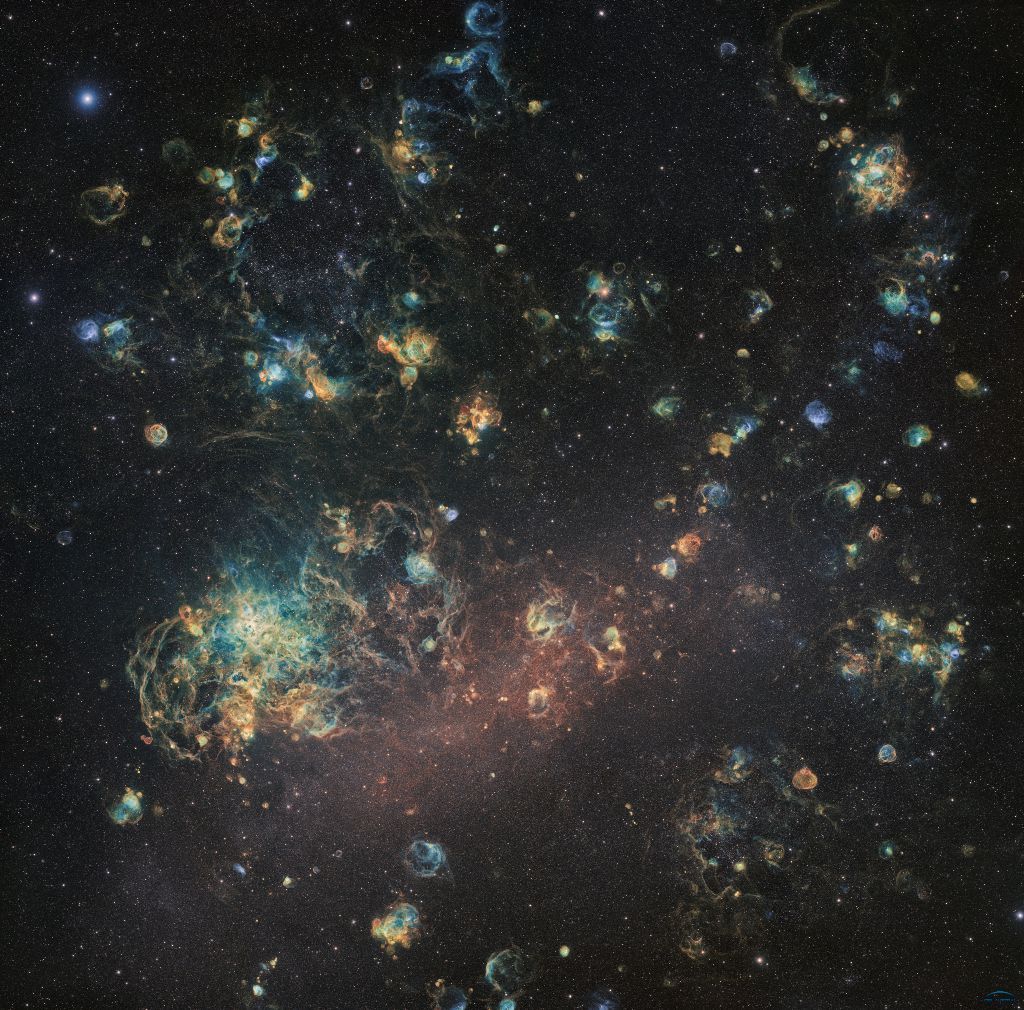
https://apod.nasa.gov/apod/ap190503.html
Open Comments
Science Tidbits
https://m.phys.org/news/2019-05-life-biochemical-networks-spontaneously-earth.html
phys.org
Life's biochemical networks could have formed spontaneously on Earth
Researchers in Strasbourg, France, have found that mixing two small biomolecules, glyoxylate and pyruvate, in iron-salt-rich water produces a reaction network resembling life's core biochemistry. This ...
Science Tidbits
https://m.medicalxpress.com/news/2019-05-neurons-brain.html
Medicalxpress
Connecting neurons in the brain
The brain consists of a large collection of interconnected neurons. How complex patterns of neuronal cells grow into functioning circuits during development has fascinated researchers for decades. A team ...
Science Tidbits
https://m.phys.org/news/2019-05-flippers-ocean-pov.html
phys.org
Data with flippers? Studying the ocean from a seal's POV
Scientist Lia Siegelman is using a surprising data source to study the ocean around Antarctica—one that has flippers and bears a passing resemblance to Jabba the Hut.
Science Tidbits
https://m.phys.org/news/2019-05-seagrass-strong-potential-curbing-erosion.html
phys.org
Study demonstrates seagrass' strong potential for curbing erosion
Most people's experience with seagrass, if any, amounts to little more than a tickle on their ankles while wading in shallow coastal waters. But it turns out these ubiquitous plants, varieties of which ...
Science Tidbits
https://m.phys.org/news/2019-05-planet-habitable.html
phys.org
What makes a planet habitable
Which of Earth's features were essential for the origin and sustenance of life? And how do scientists identify those features on other worlds?
Science Tidbits
https://m.phys.org/news/2019-05-sculpting-super-fast-pulses.html
phys.org
Sculpting super-fast light pulses: Nanopillars shape light precisely for practical applications
Imagine being able to shape a pulse of light in any conceivable manner—compressing it, stretching it, splitting it in two, changing its intensity or altering the direction of its electric field.
Science Tidbits
https://m.phys.org/news/2019-05-dinosaurs-wings-evolved.html
phys.org
Running may have made dinosaurs' wings flap before they evolved to fly
Before they evolved the ability to fly, two-legged dinosaurs may have begun to flap their wings as a passive effect of running along the ground, according to new research by Jing-Shan Zhao of Tsinghua ...
Science Tidbits
https://m.phys.org/news/2019-05-gaia-enable-accurate-billion-stars.html
phys.org
Pinpointing Gaia to enable the most accurate map ever of more than a billion stars
Gaia, operated by the European Space Agency (ESA, surveys the sky from orbit to create the largest, most precise, three-dimensional map of our Galaxy. One year ago, the Gaia mission produced its much-awaited ...
Science Tidbits
https://m.phys.org/news/2019-05-earthquakes-triggered-fluid-zones.html
phys.org
Computer model suggests earthquakes are triggered well beyond fluid injection zones
Using data from field experiments and modeling of ground faults, researchers at Tufts University have discovered that the practice of subsurface fluid injection used in 'fracking' and wastewater disposal ...
Science Tidbits
https://m.techxplore.com/news/2019-05-chip.html
Techxplore
New chip stops attacks before they start
A new computer processor architecture developed at the University of Michigan could usher in a future where computers proactively defend against threats, rendering the current electronic security model ...
Science Tidbits
https://neurosciencenews.com/ai-images-visual-neurons-13014/
Neuroscience News
These trippy images were designed by AI to super-stimulate monkey neurons
The XDREAM generative deep neural network utilizes firing rates of neurons in the visual cortex to guide the evolution of a novel, synthetic image. The evolved images activate neurons more than large numbers of natural images.
Science Tidbits
https://www.sciencedaily.com/releases/2019/05/190502143518.htm
ScienceDaily
Organ bioprinting gets a breath of fresh air
Bioengineers have cleared a major hurdle on the path to 3D printing replacement organs. It's a breakthrough technique for bioprinting tissues with exquisitely entangled vascular networks that mimic the body's natural passageways for blood, air, lymph and…
Science Tidbits
https://physics.aps.org/synopsis-for/10.1103/PhysRevLett.122.177202
Physics
Synopsis: Fast Rotation Polarizes Water
Researchers demonstrate that they can magnetize hydrogen nuclei in water by rotating the liquid at high speeds.
Science Tidbits
https://www.quantamagazine.org/brains-speed-up-perception-by-guessing-whats-next-20190502/
Quanta Magazine
Brains Speed Up Perception by Guessing What’s Next
Your expectations shape and quicken your perceptions. A new model that explains how that happens also suggests it’s time to update theories about sensory perception and decision making.
Science Tidbits
https://www.nature.com/articles/d41586-019-01278-4
Nature
Why brown fat has a lot of nerve
A protein that regulates the innervation of brown adipose tissue.
Science Tidbits
https://m.techxplore.com/news/2019-05-solar-cells-immune-ravages-air.html
Techxplore
Researchers make organic solar cells immune to the ravages of water, air and light
The market for organic solar cells is expected to grow more than 20% between 2017 and 2020, driven by advantages over traditional silicon solar cells: they can be mass produced at scale using roll-to-roll ...
Science Tidbits
https://m.techxplore.com/news/2019-05-flaws-vulnerabilities-smart-home-internet-of-things.html
Techxplore
Design flaws create security vulnerabilities for 'smart home' internet-of-things devices
Researchers at North Carolina State University have identified design flaws in "smart home" Internet-of-Things (IoT) devices that allow third parties to prevent devices from sharing information. The flaws ...
Science Tidbits
https://m.techxplore.com/news/2019-05-percent-recognition-three-quarter.html
Techxplore
Researchers achieve 100 percent recognition rates for half and three-quarter faces
Facial recognition technology works even when only half a face is visible, researchers from the University of Bradford have found.
Science Tidbits
https://arstechnica.com/tech-policy/2019/05/google-unveils-auto-delete-for-location-web-activity-and-app-usage-data/
Ars Technica
Google unveils auto-delete for location, Web activity, and app usage data
New option coming soon auto-deletes usage data but doesn't cover all activity.