Science Tidbits
@sciencetidbits
92
subscribers
878
photos
16.5K
links
Links to latest science, medicine, and technology posts with occasional world news.
Download Telegram
Join
Science Tidbits
92 subscribers
Science Tidbits
https://m.phys.org/news/2019-05-migration-north-climate-plankton.html
phys.org
Migration to the north: climate change puts plankton on the move
Climate change that has warmed the world's oceans has prompted a "worrying" northward migration among some communities of the smallest organisms in the sea: plankton.
Science Tidbits
https://neurosciencenews.com/vaccine-psychology-14059/
Neuroscience News
Want to help the vaccine hesitant become pro-vaccine? Have them meet someone with a vaccine-preventable disease - Neuroscience…
Researchers report one method to help combat anti-vaccine information and reduce vaccine hesitancy is to introduce those with negative views about immunizations to someone who has suffered a vaccine-preventable disease. The study reports 70% of students who…
Science Tidbits
https://neurosciencenews.com/aspirin-bleeding-stroke-14061/
Neuroscience News
Aspirin green light for brain bleed stroke patients - Neuroscience News
Aspirin may help reduce further bleeding in those who have suffered a stroke.
Science Tidbits
https://www.sciencedaily.com/releases/2019/05/190522141823.htm
ScienceDaily
Scientists break record for highest-temperature superconductor
An international research team of scientists has discovered superconductivity -- the ability to conduct electricity perfectly -- at the highest temperatures ever recorded.
Science Tidbits
https://physics.aps.org/articles/v12/56
Physics
Viewpoint: 3D Map of a Quantum Dot’s Potential
A new experimental method provides a way to determine the 3D confining potential of an electron in a quantum dot, allowing improved control over the electron’s spin.
Science Tidbits
https://www.nature.com/articles/d41586-019-01629-1
Nature
Billion-year-old fossils set back evolution of earliest fungi
Nature - Microscopic specimen discovered in the Canadian Arctic are surprisingly intricate.
Science Tidbits
https://www.nationalgeographic.com/animals/2019/05/peacock-spiders-black-females-courtship/
Animals
How peacock spiders use optical illusions to woo females
These tiny arachnids sport intense black patches that absorb a whopping 99.5 percent of light, enhancing nearby colors.
Science Tidbits
https://www.sciencemag.org/news/2019/05/ship-spies-largest-underwater-eruption-ever
Science
Ship spies largest underwater eruption ever
French research cruise detects massive newborn volcano on Indian Ocean floor
Science Tidbits
https://eurekalert.org/pub_releases/2019-05/bu-smm052219.php
EurekAlert!
Strange Martian mineral deposit likely sourced from volcanic explosions
In a finding that is soon to be ground-truthed by NASA's next Mars rover, Brown University researchers show that a Martian mineral deposit was likely formed by ashfall from ancient volcanic explosions.
Science Tidbits
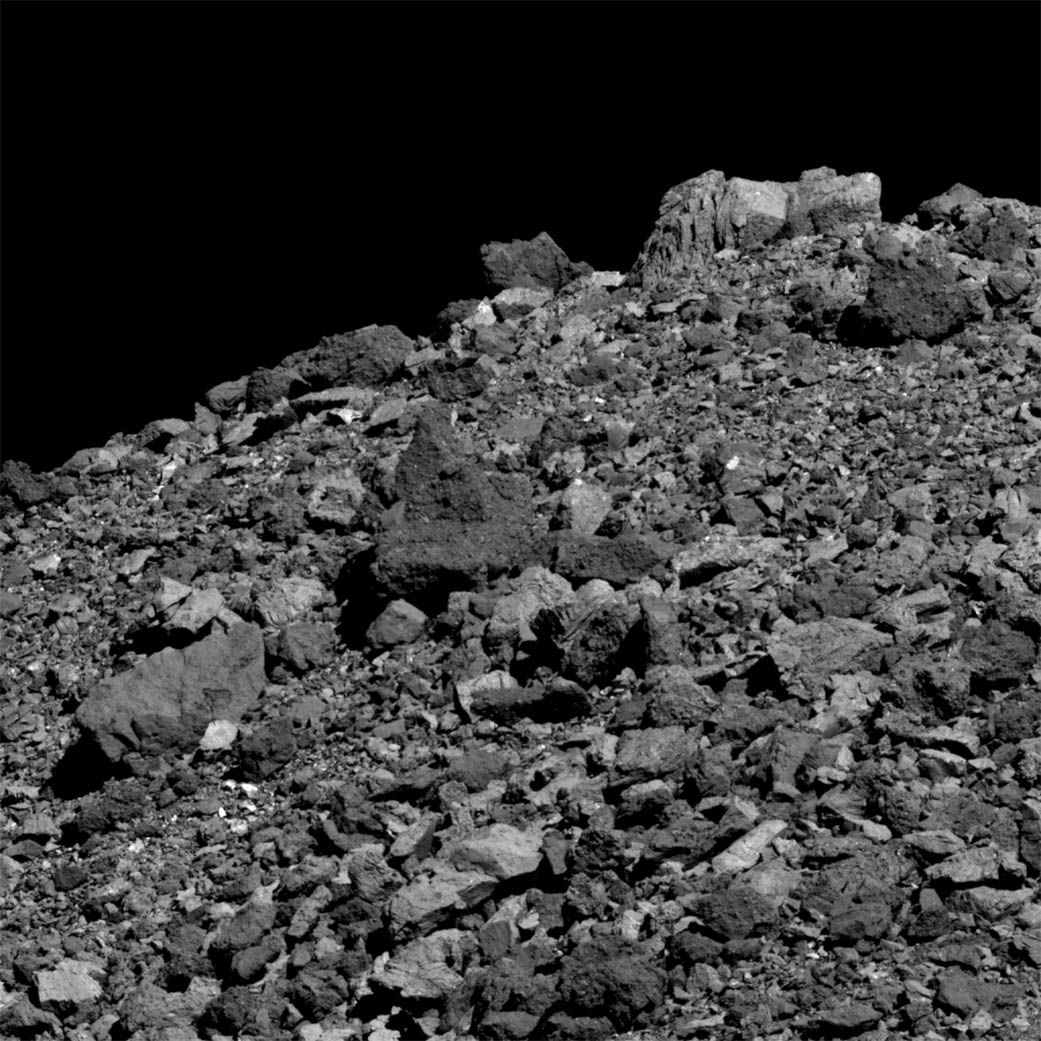
https://go.nasa.gov/2QkqzzO
Open Comments
Science Tidbits
https://m.phys.org/news/2019-05-scientists-ancient-seawater-ice-age.html
phys.org
Scientists discover ancient seawater preserved from the last Ice Age
Twenty thousand years ago, in the thick of an Ice Age, Earth looked very different. Because water was locked up in glaciers hundreds of feet thick, which stretched down over Chicago and New York City, ...
Science Tidbits
https://m.phys.org/news/2019-05-lithium-doesnt-pressure.html
phys.org
Lithium doesn't crack under pressure, it transforms
Using cutting-edge theoretical calculations performed at NERSC, researchers at Berkeley Lab's Molecular Foundry have predicted fascinating new properties of lithium—a light alkali metal that has intrigued ...
Science Tidbits
https://m.medicalxpress.com/news/2019-05-nerve-treatment-option-common.html
Medicalxpress
Nerve stimulation could provide new treatment option for most common type of stroke
Research led by a UCLA scientist found that a new nerve stimulation therapy to increase blood flow could help patients with the most common type of stroke up to 24 hours after onset.
Science Tidbits
https://m.phys.org/news/2019-05-scientists-circuit-boards-body-cells.html
phys.org
Scientists discover signalling circuit boards inside body's cells
Cells in the body are wired like computer chips to direct signals that instruct how they function, research suggests.
Science Tidbits
https://m.phys.org/news/2019-05-simple-patterns-translucent-cube.html
phys.org
Researchers perform simple calculations by shining light patterns through a translucent cube
McMaster researchers have developed a simple and highly novel form of computing by shining patterned bands of light and shadow through different facets of a polymer cube and reading the combined results ...
Science Tidbits
https://m.phys.org/news/2019-05-crabs-camouflage-revealed.html
phys.org
Crabs' camouflage tricks revealed
Crabs from a single species rely on different camouflage techniques depending on what habitat they live in, new research shows.
Science Tidbits
https://m.phys.org/news/2019-05-mites-relatives.html
phys.org
New research shows that mites and ticks are close relatives
Scientists from the University of Bristol and the Natural History Museum in London have reconstructed the evolutionary history of the chelicerates, the mega-diverse group of 110,000 arthropods that includes ...
Science Tidbits
https://m.phys.org/news/2019-05-clotilda-slave-ship-gators-snakes.html
phys.org
Clotilda: Last US slave ship discovered among gators, snakes
The old wooden ship hull didn't look like much when researchers first saw it: just broken, waterlogged boards and a few pieces of rusted metal, all stuck in the muddy bottom of a bug-infested Alabama ...
Science Tidbits
https://m.phys.org/news/2019-05-fast-die-young-tiny-fishes.html
phys.org
Live fast, die young: Study shows tiny fishes fuel coral reefs
Scientists have long sought to understand how coral reefs support such an abundance of fish life despite their location in nutrient-poor waters. According to a new study published May 23 in the journal ...
Science Tidbits
https://neurosciencenews.com/knowledge-learning-14070/
Neuroscience News
What we think we know, but might not, pushes us to learn more - Neuroscience News
Learning is best predicted by both curiosity and an objective measure of knowledge. Researchers suggest it is uncertainty, or when you think you know something then discover you don't, that leads to curiosity and learning outcomes.